

In the realm of industrial heat transfer equipment, the Through Flow Spiral Plate Heat Exchanger stands out as a highly efficient and versatile solution. As a leading supplier of Through Flow Spiral Plate Heat Exchangers, I have witnessed firsthand the critical role that flow rate plays in determining the performance of these remarkable devices. In this blog post, I will delve into the intricate relationship between flow rate and the performance of Through Flow Spiral Plate Heat Exchangers, exploring how different flow rates can impact heat transfer efficiency, pressure drop, and overall system performance.
Understanding the Through Flow Spiral Plate Heat Exchanger
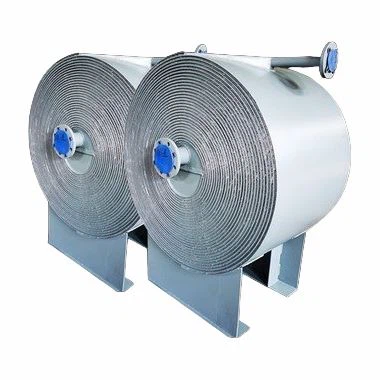
Before we dive into the impact of flow rate, let's first understand the basic principles of a Through Flow Spiral Plate Heat Exchanger. This type of heat exchanger consists of two long, flat plates that are coiled around a central core to form a spiral channel. The two fluids, typically a hot fluid and a cold fluid, flow through the spiral channels in opposite directions, allowing for efficient heat transfer between them.
The design of the Through Flow Spiral Plate Heat Exchanger offers several advantages over traditional heat exchangers. The spiral configuration provides a large heat transfer area in a compact space, resulting in high heat transfer coefficients and efficient heat transfer. Additionally, the continuous spiral flow path helps to prevent fouling and scaling, ensuring long-term performance and reliability.
The Impact of Flow Rate on Heat Transfer Efficiency
One of the primary factors affected by flow rate is heat transfer efficiency. Heat transfer efficiency is a measure of how effectively the heat exchanger transfers heat from the hot fluid to the cold fluid. In general, increasing the flow rate of either the hot or cold fluid can enhance heat transfer efficiency.
When the flow rate increases, the velocity of the fluid through the heat exchanger also increases. This higher velocity leads to a thinner boundary layer between the fluid and the heat transfer surface, reducing the thermal resistance and allowing for more efficient heat transfer. As a result, the overall heat transfer coefficient increases, and more heat is transferred from the hot fluid to the cold fluid.
However, there is a limit to the benefits of increasing flow rate. At very high flow rates, the fluid may experience turbulent flow, which can cause additional pressure drop and energy consumption. Additionally, if the flow rate is too high, the fluid may not have sufficient time to transfer heat effectively, leading to a decrease in heat transfer efficiency. Therefore, it is important to find the optimal flow rate that balances heat transfer efficiency with pressure drop and energy consumption.
The Impact of Flow Rate on Pressure Drop
Another important factor affected by flow rate is pressure drop. Pressure drop is the difference in pressure between the inlet and outlet of the heat exchanger. As the flow rate increases, the pressure drop across the heat exchanger also increases.
The pressure drop in a Through Flow Spiral Plate Heat Exchanger is primarily caused by friction between the fluid and the heat transfer surface, as well as by the change in flow direction within the spiral channels. At low flow rates, the pressure drop is relatively small, and the energy consumption required to pump the fluid through the heat exchanger is also low. However, as the flow rate increases, the pressure drop increases exponentially, and the energy consumption required to maintain the flow also increases.
Excessive pressure drop can have several negative consequences. It can increase the operating cost of the system, as more energy is required to pump the fluid through the heat exchanger. It can also reduce the flow rate of the fluid, which can negatively impact heat transfer efficiency. Therefore, it is important to carefully consider the pressure drop when selecting the flow rate for a Through Flow Spiral Plate Heat Exchanger.
The Impact of Flow Rate on Overall System Performance
In addition to heat transfer efficiency and pressure drop, flow rate can also have a significant impact on the overall performance of the system in which the Through Flow Spiral Plate Heat Exchanger is installed. For example, in a heating or cooling system, the flow rate of the fluid can affect the temperature control and stability of the system.
If the flow rate is too low, the system may not be able to transfer enough heat to maintain the desired temperature. This can result in uneven heating or cooling, as well as increased energy consumption. On the other hand, if the flow rate is too high, the system may experience excessive pressure drop and energy consumption, as well as potential damage to the heat exchanger or other components.

Therefore, it is important to select the appropriate flow rate based on the specific requirements of the system. This may involve considering factors such as the heat load, the temperature difference between the hot and cold fluids, the pressure drop limitations, and the available pumping power.
Selecting the Optimal Flow Rate
Selecting the optimal flow rate for a Through Flow Spiral Plate Heat Exchanger requires a careful balance between heat transfer efficiency, pressure drop, and overall system performance. Here are some key considerations to keep in mind when selecting the flow rate:
- Heat Transfer Requirements: Determine the heat transfer requirements of the system, including the heat load, the temperature difference between the hot and cold fluids, and the desired outlet temperatures. This will help you determine the minimum flow rate required to achieve the desired heat transfer.
- Pressure Drop Limitations: Consider the pressure drop limitations of the system, including the available pumping power and the allowable pressure drop across the heat exchanger. This will help you determine the maximum flow rate that can be used without exceeding the pressure drop limitations.
- System Stability: Consider the impact of flow rate on the stability of the system, including temperature control and fluid distribution. This may involve conducting simulations or tests to evaluate the performance of the system at different flow rates.
- Fouling and Scaling: Consider the potential for fouling and scaling in the heat exchanger, as this can affect the heat transfer efficiency and pressure drop over time. Higher flow rates can help to prevent fouling and scaling, but they may also increase the pressure drop and energy consumption.
By carefully considering these factors, you can select the optimal flow rate for your Through Flow Spiral Plate Heat Exchanger, ensuring efficient and reliable operation of your system.
Our Through Flow Spiral Plate Heat Exchangers
As a supplier of Through Flow Spiral Plate Heat Exchangers, we offer a wide range of products to meet the diverse needs of our customers. Our heat exchangers are available in various materials, including 316L Stainless Steel Spiral Plate Heat Exchanger, Non Detachable Spiral Plate Heat Exchanger, and Carbon Steel Spiral Plate Heat Exchanger, to ensure compatibility with different fluids and operating conditions.
Our heat exchangers are designed and manufactured to the highest standards of quality and performance, using advanced manufacturing techniques and materials. We also offer customized solutions to meet the specific requirements of our customers, including special sizes, configurations, and materials.
Contact Us for Procurement and Consultation
If you are interested in learning more about our Through Flow Spiral Plate Heat Exchangers or need assistance in selecting the right heat exchanger for your application, please do not hesitate to contact us. Our team of experienced engineers and technical experts is available to provide you with detailed information, technical support, and customized solutions.
We are committed to providing our customers with the highest level of service and support, and we look forward to working with you to meet your heat transfer needs.
References
- Incropera, F. P., & DeWitt, D. P. (2002). Fundamentals of heat and mass transfer. John Wiley & Sons.
- Shah, R. K., & Sekulic, D. P. (2003). Fundamentals of heat exchanger design. John Wiley & Sons.
- Kakac, S., & Liu, H. (2002). Heat exchangers: Selection, rating, and thermal design. CRC Press.