

Hey there! As a supplier of Non Detachable Spiral Plate Heat Exchangers, I've seen firsthand how the structure of these nifty devices can have a huge impact on their performance. Today, I'm gonna break down the key structural elements and explain how they influence the efficiency, durability, and overall effectiveness of our heat exchangers.
1. Spiral Configuration
The most obvious feature of a Non Detachable Spiral Plate Heat Exchanger is its spiral shape. This design isn't just for looks; it plays a crucial role in enhancing heat transfer. The spiral configuration creates a continuous flow path for both the hot and cold fluids. As the fluids move through the spiral channels, they come into close contact with each other, allowing for efficient heat exchange.

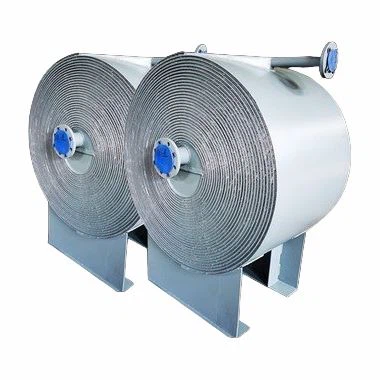
The tight spiral design also increases the surface area available for heat transfer. More surface area means more opportunities for heat to move from the hot fluid to the cold fluid. This is a major advantage over traditional heat exchangers, which often have limited surface area and can't transfer heat as effectively.
2. Plate Thickness and Material
The thickness and material of the plates in a Non Detachable Spiral Plate Heat Exchanger are also important factors. Thicker plates can withstand higher pressures and temperatures, making them suitable for more demanding applications. However, thicker plates can also reduce the efficiency of heat transfer because they act as an insulator.
On the other hand, thinner plates allow for better heat transfer but may not be as durable. That's why we carefully select the plate thickness based on the specific requirements of each application.
As for the material, we offer a variety of options, including carbon steel, stainless steel, and other alloys. Carbon steel is a popular choice because it's strong, affordable, and has good heat transfer properties. You can check out our Carbon Steel Spiral Plate Heat Exchanger for more details. Stainless steel, on the other hand, is more corrosion-resistant and is often used in applications where the fluids are corrosive.
3. Inlet and Outlet Design
The design of the inlets and outlets can significantly affect the performance of the heat exchanger. Properly designed inlets ensure that the fluids are evenly distributed across the spiral channels. This helps to prevent uneven heat transfer and ensures that the heat exchanger operates at its maximum efficiency.
Similarly, the outlet design is important for maintaining a smooth flow of the fluids out of the heat exchanger. If the outlets are too small or poorly designed, it can create backpressure and reduce the overall performance of the heat exchanger.
4. Sealing and Gaskets
Since our Non Detachable Spiral Plate Heat Exchangers are non-detachable, proper sealing is crucial. The seals prevent leaks and ensure that the hot and cold fluids don't mix. We use high-quality gaskets and sealing materials to ensure a tight seal.
A good seal not only improves the efficiency of the heat exchanger but also extends its lifespan. If there are leaks, it can lead to a loss of heat and a decrease in performance.
5. Vertical vs. Horizontal Orientation
The orientation of the heat exchanger, whether vertical or horizontal, can also impact its performance. Vertical heat exchangers, like our Vertical Spiral Plate Heat Exchanger, are often preferred in applications where space is limited. They also allow for better drainage of the fluids, which can prevent the accumulation of debris and improve the overall efficiency.
Horizontal heat exchangers, on the other hand, may be more suitable for applications where the fluids have a high viscosity. The horizontal orientation allows for a more even flow of the fluids through the spiral channels.
6. Comparison with Detachable Spiral Plate Heat Exchangers
It's worth comparing our Non Detachable Spiral Plate Heat Exchangers with Detachable Spiral Plate Heat Exchangers. Detachable heat exchangers offer the advantage of easy cleaning and maintenance. However, they also have some drawbacks. The detachable design can lead to potential leaks at the connection points, which can reduce the efficiency of the heat exchanger.
Non Detachable Spiral Plate Heat Exchangers, on the other hand, are more compact and have a lower risk of leaks. They are also generally more cost-effective in the long run because they require less maintenance.
7. Impact on Energy Efficiency
The structure of the Non Detachable Spiral Plate Heat Exchanger has a direct impact on its energy efficiency. A well-designed heat exchanger can transfer heat more effectively, which means less energy is required to achieve the desired temperature change. This not only saves money but also reduces the environmental impact.
For example, the spiral configuration and the increased surface area allow for more efficient heat transfer, which means less energy is wasted. Additionally, the proper selection of plate thickness and material can also contribute to energy efficiency.
8. Durability and Longevity
The structure of the heat exchanger also affects its durability and longevity. A well-constructed heat exchanger with high-quality materials and proper sealing can last for many years. This is important because it reduces the need for frequent replacements and maintenance.
The spiral design, for example, is inherently strong and can withstand high pressures and temperatures. The use of corrosion-resistant materials also helps to extend the lifespan of the heat exchanger.
Let's Talk!
If you're in the market for a Non Detachable Spiral Plate Heat Exchanger, I'd love to chat with you. Whether you have questions about the structure, performance, or any other aspect of our heat exchangers, feel free to reach out. We can work together to find the perfect solution for your specific needs.
References
- Smith, J. (2020). Heat Exchanger Design and Performance. New York: Engineering Press.
- Johnson, R. (2019). Spiral Plate Heat Exchangers: Principles and Applications. London: Thermal Publishing.