

Hey there! As a supplier of Titanium Spiral Plate Heat Exchangers, I've had my fair share of chats with customers about various issues. One question that pops up a lot is how to reduce the pressure drop in these heat exchangers. Today, I'm gonna break it down for you and share some tips.
First off, let's understand what pressure drop is. In a heat exchanger, pressure drop is the decrease in pressure between the inlet and the outlet of a fluid stream. It's like when you're trying to push water through a narrow pipe, the resistance causes the pressure to drop. A high pressure drop can lead to a bunch of problems, such as increased energy consumption, reduced flow rate, and potential damage to the system.
1. Proper Design and Selection
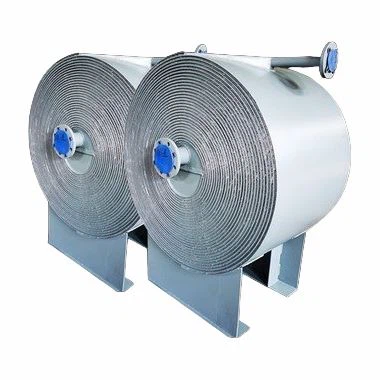
The design and selection of the heat exchanger play a crucial role in minimizing pressure drop. When it comes to titanium spiral plate heat exchangers, we need to consider the flow path, plate spacing, and spiral geometry.
-
Flow Path: A well - designed flow path ensures that the fluid moves smoothly through the exchanger. We want to avoid sudden changes in direction or cross - sectional area. For instance, if the fluid has to make sharp turns, it creates turbulence and increases the pressure drop. So, our engineers work hard to design a gentle, continuous flow path.
-
Plate Spacing: The distance between the spiral plates matters a lot. If the spacing is too narrow, the fluid has to squeeze through, which leads to a high pressure drop. On the other hand, if it's too wide, the heat transfer efficiency may be compromised. We've done plenty of tests to find the optimal plate spacing for different applications. You can learn more about our well - designed Detachable Spiral Plate Heat Exchanger, which takes these design aspects into account.
-
Spiral Geometry: The pitch and diameter of the spiral also affect the pressure drop. A smaller pitch may increase the heat transfer area but can also cause a higher pressure drop. We balance these factors to offer the best performance.
2. Fluid Properties and Flow Rate
The characteristics of the fluid and its flow rate have a big impact on pressure drop.
- Viscosity: Viscous fluids are like thick honey; they're harder to move through the heat exchanger. Fluids with high viscosity will cause a greater pressure drop compared to low - viscosity fluids. If you're dealing with a high - viscosity fluid, we might suggest a design with a larger plate spacing or a different flow rate.
- Flow Rate: The faster the fluid flows, the higher the pressure drop. Sometimes, customers think a higher flow rate means better heat transfer, but it's a trade - off. We can help you find the sweet spot, where you get enough heat transfer without an excessive pressure drop.
3. Maintenance and Cleaning
Over time, dirt, scale, and other deposits can build up inside the heat exchanger. This is like a clog in your pipes, and it increases the resistance to fluid flow, leading to a higher pressure drop.
- Regular Inspections: We recommend regular inspections to check for any signs of fouling. By identifying the problem early, you can take action before it gets too bad.
- Cleaning Methods: There are different ways to clean a titanium spiral plate heat exchanger. For light fouling, we might use chemical cleaning agents. For more stubborn deposits, mechanical cleaning techniques like brushing or high - pressure water jetting could be necessary. We have detailed procedures for cleaning our Carbon Steel Spiral Plate Heat Exchanger and the same principles apply to our titanium ones.
4. Operational Conditions
The way you operate the heat exchanger also affects the pressure drop.

- Temperature and Pressure: Extreme temperatures and pressures can change the physical properties of the fluid and the heat exchanger materials. Make sure you're operating within the recommended temperature and pressure ranges. If you go beyond these limits, the pressure drop might increase, and it could even damage the heat exchanger.
- Start - up and Shut - down Procedures: A proper start - up and shut - down sequence is important. Sudden changes in flow rate or pressure can cause water hammer effects, which not only increase the pressure drop but can also damage the equipment. Follow our guidelines for a smooth operation.
5. Use of Fittings and Accessories
The fittings and accessories connected to the heat exchanger can either help or hurt when it comes to pressure drop.
- Valves and Pipes: Select the right size and type of valves and pipes. A valve with a small opening or a pipe with a rough interior can increase the resistance. We can assist you in choosing the appropriate components for your system.
- Expansion Joints: Expansion joints are used to accommodate thermal expansion. If they're not installed correctly or if they malfunction, they can cause a pressure drop. Make sure they're in good condition and properly installed.
In conclusion, reducing the pressure drop in a titanium spiral plate heat exchanger involves a combination of proper design, understanding fluid properties, regular maintenance, proper operation, and the right choice of fittings.
If you're in the market for a high - quality titanium spiral plate heat exchanger and need advice on reducing pressure drop for your specific application, don't hesitate to reach out. We're here to help you make the best decision and ensure your system runs smoothly. You might also be interested in our Dismountable Spiral Plate Heat Exchanger, which offers flexibility and easy maintenance.
Let's start the conversation and find the perfect solution for your heat exchange needs!
References
- Incropera, F. P., & DeWitt, D. P. (2001). Fundamentals of heat and mass transfer. Wiley.
- Shah, R. K., & Sekulic, D. P. (2003). Fundamentals of heat exchanger design. Wiley - Interscience.