

Hey there! As a supplier of Titanium Spiral Plate Heat Exchangers, I've seen my fair share of issues with these nifty devices. In this blog, I'm gonna walk you through the common failures of a titanium spiral plate heat exchanger and how to troubleshoot them.
Common Failures and Troubleshooting
1. Fouling
Fouling is one of the most common problems with heat exchangers. It occurs when deposits build up on the heat transfer surfaces, reducing the efficiency of the heat exchanger. The deposits can be anything from dirt, scale, and corrosion products to biological growth.
Causes:
- Poor water quality: If the water used in the heat exchanger contains high levels of minerals, it can lead to scale formation.
- Lack of maintenance: Infrequent cleaning can allow dirt and debris to accumulate over time.
- High fluid velocity: This can cause erosion and corrosion, leading to the formation of deposits.
Troubleshooting:
- Regular cleaning: Use chemical cleaning agents or mechanical methods to remove the deposits. Make sure to follow the manufacturer's recommendations for cleaning.
- Water treatment: Install a water treatment system to remove minerals and other impurities from the water.
- Monitor fluid velocity: Keep the fluid velocity within the recommended range to prevent erosion and corrosion.
2. Leakage
Leakage can occur at the joints, gaskets, or tubes of the heat exchanger. It can lead to loss of fluid, reduced efficiency, and even safety hazards.
Causes:
- Improper installation: If the heat exchanger is not installed correctly, it can cause stress on the joints and gaskets, leading to leakage.
- Corrosion: Over time, the metal components of the heat exchanger can corrode, causing holes and leaks.
- Thermal stress: Rapid changes in temperature can cause the metal to expand and contract, leading to stress on the joints and gaskets.
Troubleshooting:
- Check the installation: Make sure the heat exchanger is installed correctly and all the joints and gaskets are tightened properly.
- Inspect for corrosion: Look for signs of corrosion on the metal components and replace any damaged parts.
- Control thermal stress: Use insulation to reduce the temperature changes and prevent thermal stress.
3. Reduced Heat Transfer Efficiency
If the heat exchanger is not transferring heat efficiently, it can lead to higher energy consumption and reduced performance.
Causes:
- Fouling: As mentioned earlier, fouling can reduce the heat transfer efficiency by creating a barrier between the fluids.
- Incorrect flow rate: If the flow rate of the fluids is too low or too high, it can affect the heat transfer efficiency.
- Damaged tubes: If the tubes are damaged, it can reduce the surface area available for heat transfer.
Troubleshooting:
- Clean the heat exchanger: Remove any fouling from the heat transfer surfaces to improve the heat transfer efficiency.
- Adjust the flow rate: Make sure the flow rate of the fluids is within the recommended range.
- Replace damaged tubes: If the tubes are damaged, replace them with new ones.
4. Vibration
Vibration can cause damage to the heat exchanger and its components, leading to reduced performance and even failure.
Causes:
- Unbalanced flow: If the flow of the fluids is not balanced, it can cause vibration.
- Loose components: If the components of the heat exchanger are not tightened properly, it can cause vibration.
- Resonance: If the frequency of the vibration matches the natural frequency of the heat exchanger, it can cause resonance and damage.
Troubleshooting:
- Balance the flow: Make sure the flow of the fluids is balanced to reduce vibration.
- Tighten the components: Check all the components of the heat exchanger and tighten any loose ones.
- Dampen the vibration: Use vibration dampeners to reduce the vibration and prevent damage.
Other Types of Spiral Plate Heat Exchangers
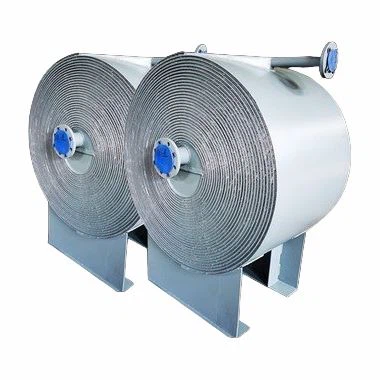
In addition to titanium spiral plate heat exchangers, we also offer other types of spiral plate heat exchangers, such as Carbon Steel Spiral Plate Heat Exchanger, Dismountable Spiral Plate Heat Exchanger, and Hastelloy Spiral Plate Heat Exchanger. Each type has its own advantages and disadvantages, so make sure to choose the one that best suits your needs.

Conclusion
Titanium spiral plate heat exchangers are reliable and efficient devices, but they can experience common failures like fouling, leakage, reduced heat transfer efficiency, and vibration. By understanding the causes of these failures and how to troubleshoot them, you can keep your heat exchanger running smoothly and efficiently. If you have any questions or need help with your heat exchanger, don't hesitate to contact us. We're here to help you find the right solution for your needs.
References
- Incropera, F. P., & DeWitt, D. P. (2002). Fundamentals of heat and mass transfer. John Wiley & Sons.
- Kakac, S., & Liu, H. (2002). Heat exchangers: selection, rating, and thermal design. CRC Press.