

As a supplier of Through Flow Spiral Plate Heat Exchangers, I understand the importance of energy efficiency in today's industrial landscape. Energy-saving measures not only reduce operational costs but also contribute to environmental sustainability. In this blog post, I will discuss several effective energy-saving measures for Through Flow Spiral Plate Heat Exchangers.
Optimize Fluid Flow Rates
One of the fundamental ways to save energy in a Through Flow Spiral Plate Heat Exchanger is to optimize the fluid flow rates. The heat transfer efficiency of the heat exchanger is closely related to the flow rate of the fluids. If the flow rate is too low, the heat transfer coefficient will decrease, resulting in poor heat transfer performance. On the other hand, if the flow rate is too high, it will increase the pressure drop across the heat exchanger, which requires more pumping power.
To find the optimal flow rate, it is necessary to conduct a detailed analysis of the specific application. This analysis should take into account factors such as the type of fluids, the temperature difference between the hot and cold fluids, and the desired heat transfer rate. By adjusting the flow rates to the optimal values, the heat exchanger can operate more efficiently, reducing energy consumption.
Maintain Proper Insulation
Proper insulation is crucial for energy conservation in a Through Flow Spiral Plate Heat Exchanger. Heat loss through the walls of the heat exchanger can significantly reduce its efficiency. By insulating the heat exchanger, the amount of heat lost to the surroundings can be minimized, allowing more of the heat to be transferred between the fluids.
There are various types of insulation materials available, such as fiberglass, mineral wool, and foam. The choice of insulation material depends on factors such as the operating temperature, the environment, and the budget. It is important to ensure that the insulation is installed correctly and maintained regularly to prevent any damage or degradation.
Regular Cleaning and Maintenance
Regular cleaning and maintenance of the Through Flow Spiral Plate Heat Exchanger are essential for its efficient operation. Over time, fouling can occur on the heat transfer surfaces, which reduces the heat transfer coefficient and increases the pressure drop. Fouling can be caused by various factors, such as the presence of impurities in the fluids, corrosion, and biological growth.
To prevent fouling, it is recommended to implement a regular cleaning schedule. This can involve using chemical cleaning agents or mechanical cleaning methods, depending on the type and severity of the fouling. In addition to cleaning, regular maintenance checks should be carried out to ensure that all components of the heat exchanger are in good working condition. This includes checking for leaks, inspecting the gaskets, and monitoring the pressure and temperature readings.
Use High-Efficiency Materials
The choice of materials for the Through Flow Spiral Plate Heat Exchanger can also have a significant impact on its energy efficiency. High-efficiency materials, such as Carbon Steel Spiral Plate Heat Exchanger, Titanium Spiral Plate Heat Exchanger, and 316L Stainless Steel Spiral Plate Heat Exchanger, offer better heat transfer performance and corrosion resistance compared to traditional materials.
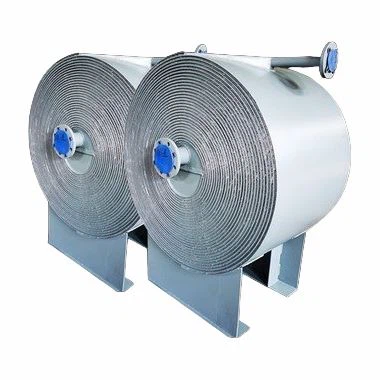

Carbon steel is a commonly used material for heat exchangers due to its low cost and good mechanical properties. Titanium, on the other hand, is known for its excellent corrosion resistance, making it suitable for applications involving aggressive fluids. 316L stainless steel is also a popular choice, as it offers a good balance between cost, corrosion resistance, and heat transfer performance.
Implement Energy Recovery Systems
In some cases, it may be possible to implement energy recovery systems in conjunction with the Through Flow Spiral Plate Heat Exchanger. Energy recovery systems can capture and reuse the waste heat generated by the heat exchanger, reducing the overall energy consumption of the process.
One example of an energy recovery system is a heat exchanger network, where the waste heat from one process is used to preheat the fluids in another process. Another example is the use of a waste heat boiler, which can convert the waste heat into steam, which can then be used for various purposes, such as power generation or heating.
Monitor and Control the System
Monitoring and controlling the operation of the Through Flow Spiral Plate Heat Exchanger is essential for optimizing its energy efficiency. By continuously monitoring the temperature, pressure, and flow rate of the fluids, any deviations from the optimal operating conditions can be detected early and corrective actions can be taken.
Advanced control systems can be used to automate the operation of the heat exchanger, adjusting the flow rates and other parameters in real-time based on the process requirements. This can help to ensure that the heat exchanger operates at its maximum efficiency at all times.
Conclusion
In conclusion, there are several energy-saving measures that can be implemented for a Through Flow Spiral Plate Heat Exchanger. By optimizing the fluid flow rates, maintaining proper insulation, regular cleaning and maintenance, using high-efficiency materials, implementing energy recovery systems, and monitoring and controlling the system, the energy consumption of the heat exchanger can be significantly reduced.
As a supplier of Through Flow Spiral Plate Heat Exchangers, we are committed to providing our customers with high-quality products and solutions that are energy-efficient and environmentally friendly. If you are interested in learning more about our products or discussing your specific requirements, please feel free to contact us for a consultation. We look forward to working with you to achieve your energy-saving goals.
References
- Incropera, F. P., & DeWitt, D. P. (2002). Fundamentals of Heat and Mass Transfer. John Wiley & Sons.
- Holman, J. P. (2002). Heat Transfer. McGraw-Hill.
- Kakac, S., & Liu, H. (2002). Heat Exchangers: Selection, Rating, and Thermal Design. CRC Press.