

In the realm of industrial heat exchange, carbon steel spiral plate heat exchangers are widely recognized for their efficiency and versatility. As a supplier of these essential pieces of equipment, I've witnessed firsthand how material quality can significantly impact the performance of a carbon steel spiral plate heat exchanger. In this blog, I'll delve into the intricate relationship between material quality and heat exchanger performance, exploring various aspects that are crucial for both manufacturers and end - users.
1. Thermal Conductivity
One of the most fundamental performance indicators of a heat exchanger is its thermal conductivity, which determines how effectively it can transfer heat between two fluids. High - quality carbon steel has consistent and appropriate carbon content and alloying elements, which facilitate good thermal conductivity.
When the material quality is sub - par, impurities in the carbon steel can disrupt the heat transfer process. For example, if there are excessive non - metallic inclusions such as oxides or sulfides in the steel, they act as insulators, reducing the overall thermal conductivity. This means that the heat exchanger will take longer to transfer the same amount of heat, resulting in decreased efficiency.
A well - made Carbon Steel Spiral Plate Heat Exchanger with high - quality carbon steel can quickly and efficiently transfer heat, which is essential in applications such as chemical processing, power generation, and HVAC systems. In contrast, a heat exchanger constructed from low - quality carbon steel may require more energy input to achieve the same heat transfer results, leading to higher operating costs over time.
2. Corrosion Resistance
Corrosion is a major concern in heat exchanger applications, especially when dealing with fluids that may be acidic, alkaline, or contain corrosive substances. The quality of the carbon steel used in a spiral plate heat exchanger plays a vital role in its corrosion resistance.
High - quality carbon steel can be treated or alloyed to enhance its ability to withstand corrosion. For instance, adding small amounts of chromium or nickel can form a passive oxide layer on the surface of the steel, protecting it from further corrosion. If the material quality is poor, the steel is more prone to rusting and pitting corrosion.
Once corrosion occurs, it not only damages the structural integrity of the heat exchanger but also affects its performance. Corroded surfaces can reduce the flow area of the heat exchanger channels, increasing the pressure drop across the unit. This, in turn, requires more energy to pump the fluids through the heat exchanger, and it can also lead to uneven heat transfer due to the formation of scale and corrosion products on the heat transfer surfaces. In extreme cases, corrosion can cause leaks, rendering the heat exchanger inoperable.
In some situations where better corrosion resistance is required, customers may consider alternative materials such as 316L Stainless Steel Spiral Plate Heat Exchanger. However, for many applications where the cost - performance ratio is important, high - quality carbon steel is still a viable choice.
3. Mechanical Strength and Durability
The mechanical strength of the carbon steel is essential for the long - term durability of the spiral plate heat exchanger. A heat exchanger operates under various pressures and temperatures, and it needs to withstand the mechanical stresses associated with these conditions.
High - quality carbon steel has excellent mechanical properties, including high tensile strength and yield strength. This means that the heat exchanger can maintain its shape and integrity under high - pressure and high - temperature conditions without deformation or failure.
On the other hand, low - quality carbon steel may have inconsistent mechanical properties. It may be more brittle or have lower strength, making it more likely to crack or rupture under stress. For example, in a high - pressure steam application, a heat exchanger made from low - quality carbon steel could experience a catastrophic failure, leading to significant downtime and safety risks.
The durability of the heat exchanger is also related to its ability to resist wear and tear. In applications where the fluids contain solid particles, such as in some mining or wastewater treatment processes, the inner walls of the heat exchanger are subject to abrasion. High - quality carbon steel can better withstand this abrasion, ensuring a longer service life for the heat exchanger.

4. Weldability and Fabrication Quality
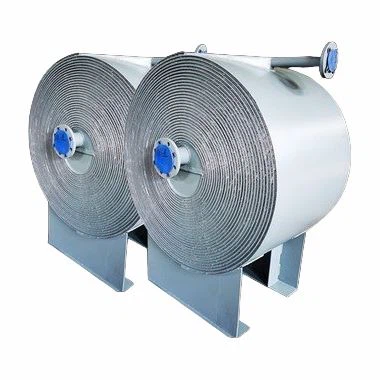
The process of fabricating a carbon steel spiral plate heat exchanger involves welding the spiral plates together. The quality of the carbon steel affects its weldability, which in turn impacts the overall fabrication quality of the heat exchanger.
High - quality carbon steel is more conducive to welding. It has a lower risk of forming weld defects such as cracks, porosity, or lack of fusion. Welds in a high - quality heat exchanger are strong and reliable, providing a tight seal between the spiral plates. This is crucial for preventing fluid leakage and maintaining the efficiency of the heat exchanger.
In contrast, low - quality carbon steel may have issues during the welding process. The presence of impurities or inconsistent chemical composition can lead to poor weld quality, which can compromise the integrity of the heat exchanger. Sub - standard welds may fail over time, resulting in leaks and reduced performance.
As a supplier, we pay great attention to the fabrication process, using high - quality carbon steel to ensure that our Carbon Steel Spiral Plate Heat Exchanger meets the highest standards of quality and performance.
5. Compatibility with Working Fluids
The material quality of carbon steel also affects its compatibility with different working fluids. Different industries use a wide variety of fluids in their heat exchange processes, and the heat exchanger material must be able to interact with these fluids without adverse effects.
High - quality carbon steel can be designed to have better compatibility with specific fluids. For example, in some food and beverage industries, the heat exchanger needs to be made from carbon steel that is non - reactive with the food products to ensure product safety. In chemical industries, the carbon steel should be able to resist the corrosive effects of the chemicals used.
Low - quality carbon steel may react with the working fluids, leading to contamination of the fluids or degradation of the heat exchanger material. This can not only affect the quality of the final product but also reduce the lifespan of the heat exchanger.
In some specialized applications where extreme chemical resistance is required, Titanium Spiral Plate Heat Exchanger may be a better option. However, for most common industrial applications, high - quality carbon steel provides a good balance between cost and performance.
Conclusion and Call to Action
In conclusion, the material quality of carbon steel has a profound impact on the performance of a spiral plate heat exchanger. From thermal conductivity and corrosion resistance to mechanical strength and weldability, every aspect of the material quality contributes to the overall efficiency, durability, and reliability of the heat exchanger.
As a professional supplier of carbon steel spiral plate heat exchangers, we are committed to using only the highest - quality materials to ensure that our products meet and exceed our customers' expectations. We understand the specific needs of different industries and can provide customized solutions to meet those needs.
If you are in the market for a high - performance carbon steel spiral plate heat exchanger or have any questions about our products, we invite you to reach out to us for a detailed discussion. Our team of experts is ready to assist you in selecting the most suitable heat exchanger for your application.
References
- Incropera, F. P., & DeWitt, D. P. (2002). Fundamentals of Heat and Mass Transfer. John Wiley & Sons.
- Perry, R. H., & Green, D. W. (1997). Perry's Chemical Engineers' Handbook. McGraw - Hill.
- ASM International. (2004). ASM Handbook Volume 13A: Corrosion: Fundamentals, Testing, and Protection. ASM International.